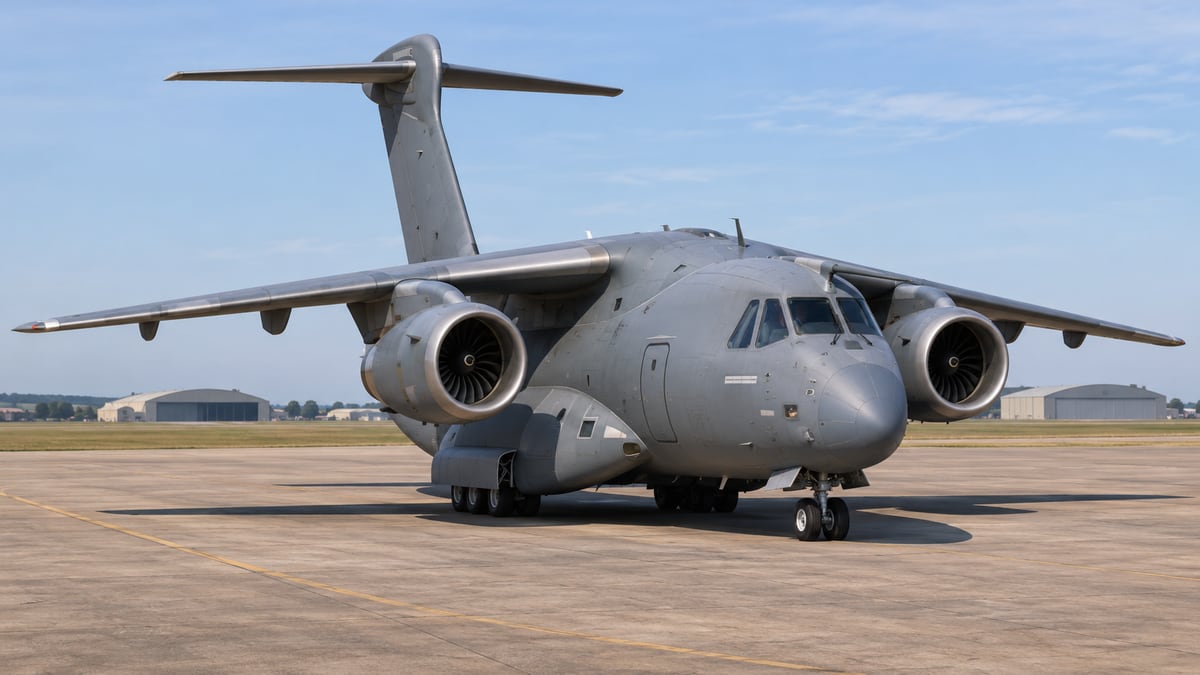
For nearly seven decades Lockheed Martin’s C-130 Hercules has dominated military airlift. Embraer’s newer C-390 Millennium, a twin-engine jet, is now winning orders and selections from NATO members, EU countries and close US partners.
Buyers and selectors include Portugal, Hungary, the Netherlands, the Czech Republic, Sweden, Greece, Austria, South Korea, the United Arab Emirates, Uzbekistan and Colombia. Lithuania and Slovakia have also selected the Brazilian aircraft, though those procurements are not yet final orders. Several of these countries have long flown the C-130 or the C-130J Super Hercules. Embraer is better known for commercial and regional passenger jets than for military transports.
The Hercules first flew in 1954 and entered US Air Force service in 1956. More than 2,500 aircraft have been built. The C-130J, in service since the late 1990s, has logged millions of flight hours. The family is flown by more than 60 countries and has served in the Vietnam War, Operation Desert Storm, Operation Enduring Freedom and Operation Iraqi Freedom. It can use short, rough, unpaved and high-altitude strips. In 2013 an Indian C-130J-30 set a class record with a landing at Daulat Beg Oldie in Ladakh, about 16,614 feet above sea level. A large support network and a second-hand market remain strengths. In 2025 Turkey acquired 12 retired Royal Air Force C-130J-30 aircraft from the United Kingdom.
The C-390 uses two IAE V2500-E5 turbofans, related to engines on the Airbus A320 family. The C-130J uses four Rolls-Royce AE 2100D3 turboprops. The Brazilian jet cruises at about 870 km/h, with a maximum near 980 km/h, against a typical C-130J cruise in the region of 500–670 km/h. Its service ceiling is about 36,000 feet, compared with around 28,000 feet for the C-130J. Payload is about 26 tonnes against roughly 20 tonnes for the C-130J, depending on variant. The C-390 has full fly-by-wire controls; the C-130J’s modern avionics still sit on mechanical and hydraulic flight controls. The Hercules keeps an edge in low-speed work, short austere strips and specialised airdrops. Both can use suitable unpaved runways.
Estimated C-390 prices run from about $130 million to $170 million, broadly in line with modern C-130J packages. Earlier in November 2026 Greece agreed with Embraer to buy three KC-390s for about $671 million, with an option for three more. In 2020 New Zealand signed a $1.5 billion deal for five C-130J-30s, including training, simulators and support. Embraer argues that two engines, newer systems and commercial-derivative powerplants can cut operating costs for smaller fleets.
In August 2026 India asked for proposals for about 60 Medium Transport Aircraft for the Indian Air Force, a contest expected to exceed $10 billion. Mahindra Defence is offering the C-390 with Embraer. Lockheed Martin is offering the C-130J with Tata Advanced Systems. India already flies the C-130J in the high Himalayas. New Delhi wants domestic manufacturing and technology partnerships. A win would be Embraer’s largest C-390 export.
Lockheed Martin still has production experience, a wide user base, logistics depth and a record in combat and humanitarian flying. The European orders show partners weighing speed, payload, industrial ties and lifetime cost alongside long supplier relationships. Embraer still has to raise output, build support abroad and prove the jet in service. India’s choice could show whether the C-390 has become a credible alternative to the American airlifter.