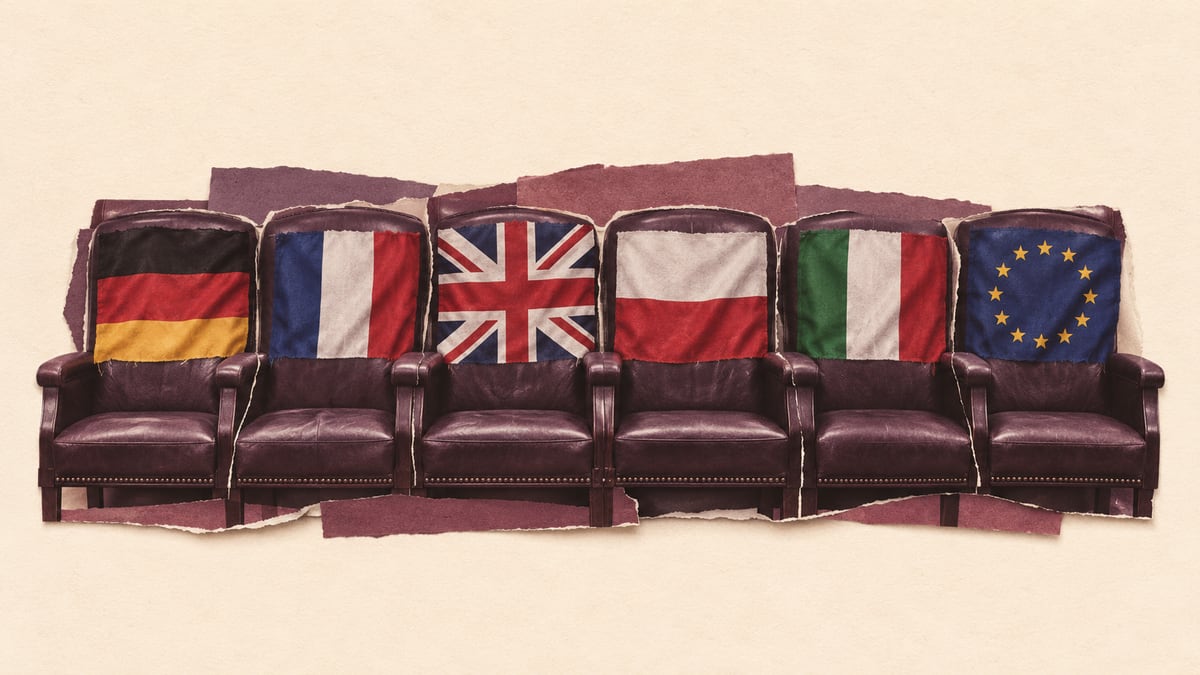
The United Kingdom will help represent Europe in Ukraine peace negotiations as one of the E5 powers, together with France, Germany, Poland, Italy and the EU institutions.
EU President António Costa announced the decision at the concluding press conference after an informal EU summit in Dublin on Friday. He said the heads of state and government had agreed that the EU institutions and the E5 countries, drawn from the coalition of willing states backing Ukraine, would represent Europe. He said Europe’s positions were already well known, that the European team would coordinate in full agreement, and that Europe must speak with one clear voice.
The decision follows a weeks-long dispute inside the EU over who speaks for Europe. It was triggered by a phone call on 27 October, when Finland’s President Alexander Stubb and Norway’s Prime Minister Jonas Gahr Støre called Russia’s President Vladimir Putin themselves. The 90-minute call led to a bitter clash. Denmark’s Prime Minister Mette Frederiksen openly criticised her Nordic colleagues for failing to coordinate the call with other EU countries. Italy’s Prime Minister Giorgia Meloni later described Europe’s approach as messy in an unusually blunt letter to Costa and demanded that one representative be given a single mandate.
The row also exposed disagreement over whether Europe should talk to Putin at all before a ceasefire. The EU’s foreign policy chief, Kaja Kallas, does not believe that it should.
Before peace talks in Abu Dhabi this week, it was unclear who would represent Europe. The group that took part was the E3 — France, the United Kingdom and Germany — plus Italy and representatives of the European Commission and the Council. Friday’s decision adds Poland, so that all five E5 powers are included. That matters to Poland and to the Baltic and Nordic countries, which, like Poland, have traditionally taken a hard line toward Russia. With Poland inside the group, the countries speaking for Europe are not limited to the traditional Western European military powers when they also speak for EU states that border Russia.
Costa said the number of negotiators was needed so Europe could protect different interests. He said only Ukraine has the legitimacy to discuss territory and its own sovereignty, while the EU has a central role in Ukraine’s European future, reconstruction and future economic growth. Security guarantees, he said, must be handled inside the coalition of willing countries in close coordination with NATO. The EU does not have the forces for a possible peacekeeping mission or other security guarantees in a peace agreement, and only individual EU and NATO countries can decide whether to send soldiers and how many. NATO is also expected to take part in the negotiations.